
Last August I pulled a furnace filter that had been in for six weeks. It came out gray, a little floppy, and smelling like a beach towel left in a hot car.
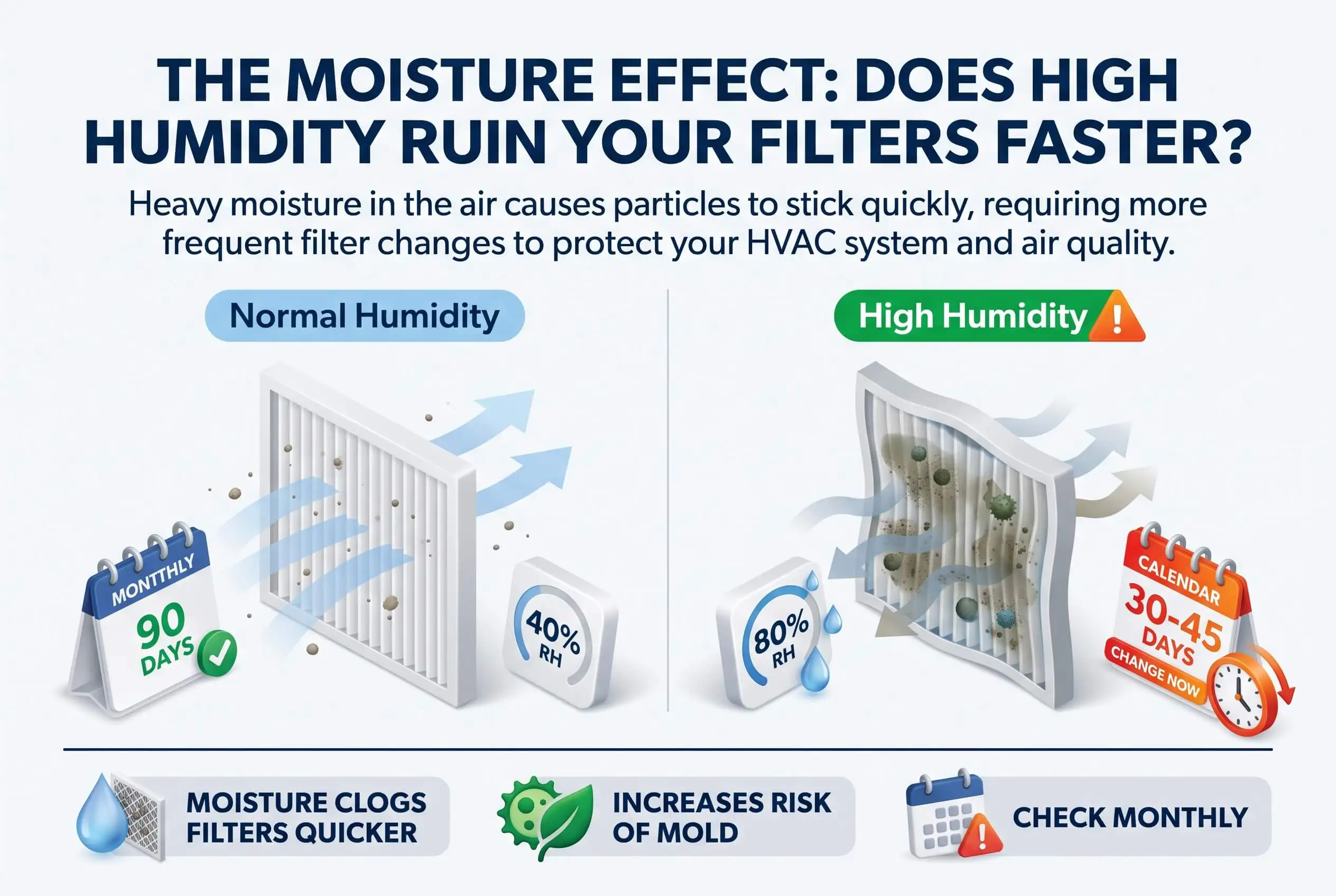
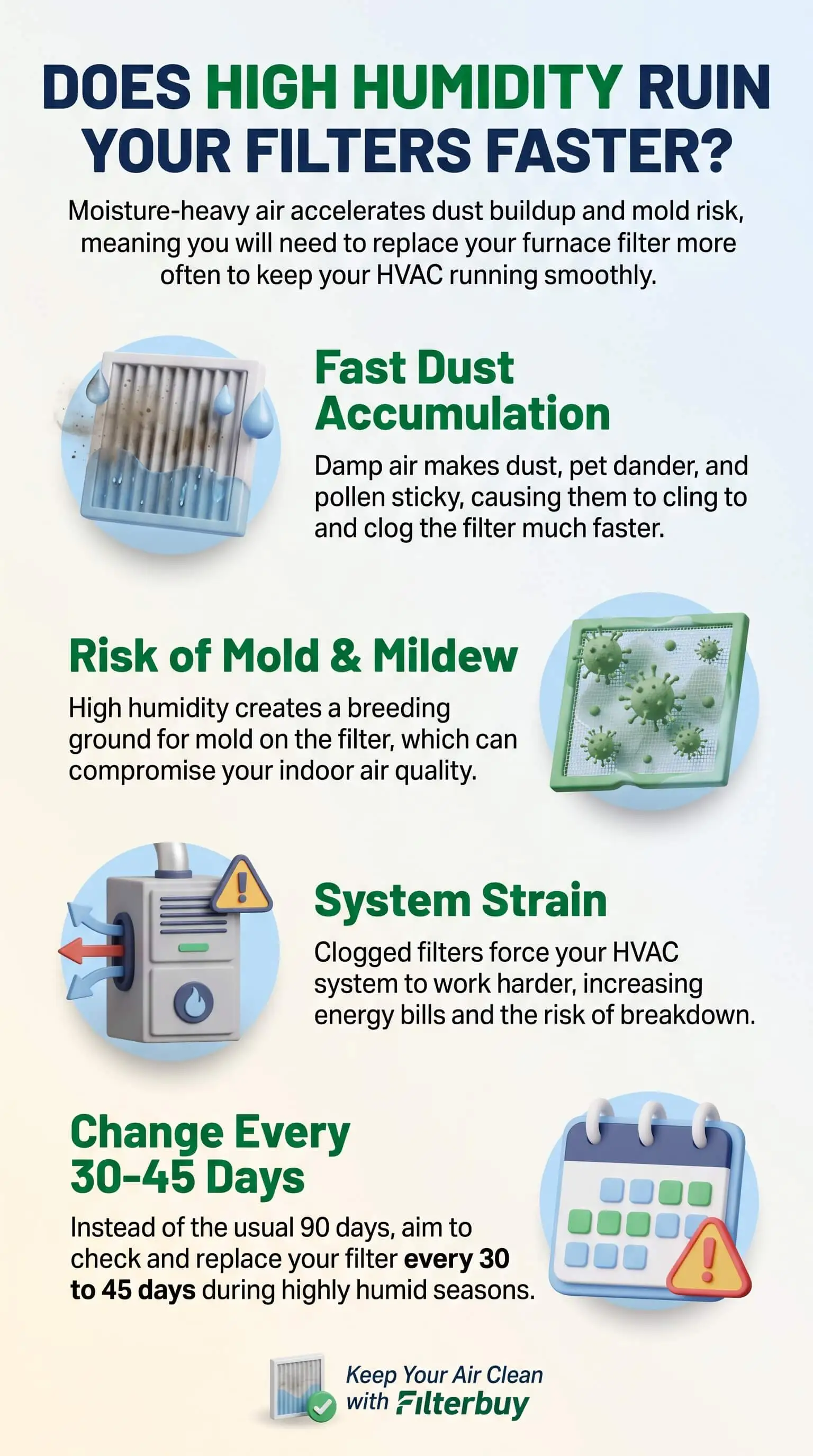
That's high humidity at work. When indoor air sits above 50 percent relative humidity for weeks at a stretch, furnace filters fill up faster, and plenty of homes need a fresh one every 30 to 60 days rather than the 90 printed on the package.
Don't take that sticky air for granted. You'll never see the mold spores riding through your ducts or the dust mite debris packing into the pleats, but your filter catches most of it, and your HVAC system pays for whatever the filter can't hold.
TL;DR Quick Answers
furnace filters
Furnace filters are the framed pleated or fiberglass panels that sit in your HVAC return or air handler, trapping dust, pollen, pet dander, and mold spores before they reach your blower and coil. Most homes need a new one every 60 to 90 days, and humid homes often need one every 30 to 60.
Match the exact size: Use the dimensions printed on the old filter’s frame, such as 16x25x1, so air can’t slip around the edges.
MERV 8 filter fits most homes: These ratings capture pollen, dander, and mold spores without choking airflow in typical residential systems.
Humidity shortens filter life: Above 50 percent indoor humidity, longer cooling cycles and damp media load filters faster.
Check monthly, replace on odor: A musty smell or gray, damp media means it’s time, whatever the calendar says.
A clean filter saves energy: Swapping out a clogged filter can cut an air conditioner’s energy use by 5 to 15 percent, according to the U.S. Department of Energy.
Top Takeaways
Humid air loads filters faster through longer run times, clumping particles, and damp media.
Above 50 percent humidity, plan on a new filter every 30 to 60 days instead of 90.
A musty smell means replacement, even when the filter still looks clean.
Higher MERV ratings catch more spores but call for closer checks.
Indoor humidity between 30 and 50 percent protects your filter, your coil, and your air.
How Humidity Changes the Way Furnace Filters Load
Moisture won't plug a filter on its own, although it speeds up everything that does. Start with run time. Sticky indoor air keeps your cooling system going longer so it can wring the water out, and every extra hour pushes more air and more particles through the filter.
Damp air changes the particles too. Dust, pollen, and spores pick up moisture, clump together, and lodge deep in the media instead of sitting on the surface where you'd spot them.
Then there's the filter itself. Some media soaks up moisture from humid air, and as the fibers swell and dirt packs in, resistance to airflow climbs. Engineers call that resistance pressure drop. It's the basic tradeoff behind every air filter, and it explains why a filter can fight your blower long before it looks dirty.
What a Damp, Loaded Filter Does Inside Your HVAC System
Your filter sits just upstream of the evaporator coil, which stays cold and wet all cooling season. That coil pulls water out of the air and drains it into a condensate pan. Park a damp, dust-packed filter next to it, and mold spores get the moisture and food they need.
A clogged furnace filter creates a second headache. Air that can't get through the media slips around the edges and carries dirt straight onto the coil. Grime on the coil cuts how much heat and humidity it can pull from your air, and some systems ice over. Plenty of expensive summer service calls start with a cheap filter.
Your nose usually catches the problem first. A musty smell when the system kicks on means you should check the filter and the drain pan that day.
How Often to Change Furnace Filters in a Humid Home
Standard intervals, like the ones in this guide to how often you should change furnace filters, assume average conditions. Humidity changes the math. I follow a schedule keyed to indoor relative humidity.
Below 50 percent: Stick with the normal interval for your filter type and look at it monthly.
50 to 60 percent, or the peak of cooling season: Swap it every 30 to 60 days.
Above 60 percent, or humidity plus pets or allergies: Inspect it every two to three weeks and replace it the moment you see discoloration, feel dampness, or smell anything musty.
A digital hygrometer costs less than one service visit and tells you which group your home falls into. Keep a couple of correctly sized filters on the shelf, and the shorter schedule stops feeling like a chore.
A Quick Monthly Filter Check
Turn the system off at the thermostat.
Slide the filter out and hold it up to a bright window or flashlight.
Press the media and frame to feel for dampness or warping.
Give it a sniff. Musty means replace, whatever the color.
Write today's date on the new filter's frame before you slide it in.
Signs Humidity Is Wearing Out Your Filter Early
Any one of these is reason enough to pull the filter.
A musty or sour smell at the vents when the blower starts
Gray-green spotting, or media that feels damp or heavy
A bowed or soft cardboard frame
Weak airflow from supply vents, especially in rooms farthest from the air handler
Condensation or standing water near the return grille or air handler
Longer cooling cycles with the thermostat set where it always is
Does a Higher MERV Filter Help or Hurt in Humid Weather?
It can do either, depending on your system. A MERV 8 to 11 filter traps more mold spores and dust mite debris than a basic fiberglass panel, which counts for a lot when humid air keeps those particles moving. The catch is that denser media loads faster and adds more pressure drop, so pair a higher rating with more frequent checks.
Before you upgrade, make sure your blower can handle the extra resistance. This rundown of common high-MERV myths covers what to look for.
Bring Indoor Humidity Down to Protect Your Filter
A shorter filter schedule handles the symptom, but lowering indoor humidity is what fixes the cause. Aim for 30 to 50 percent relative humidity inside, and treat 60 percent as the ceiling.
Measure it. Set a hygrometer in a central room, away from the kitchen and bathrooms.
Use the tools you already own. Many thermostats and air conditioners have a dehumidifier setting, and a standalone dehumidifier does heavy lifting in a basement.
Send moisture outside. Run the bathroom fan during and after showers, and the range hood whenever you cook.
Keep the condensate line clear. A clogged drain raises indoor humidity and puts water where you don't want it.
Once humidity holds steady in that range, most filters drift back toward their normal lifespan.
“In my experience testing filters pulled from humid homes, the media often holds airflow back well before the surface turns gray, because moisture lets fine dust bind deep in the fibers instead of passing through. That's why I tell homeowners in sticky climates to go by the calendar and the smell rather than color alone.”
7 Essential Resources
Replacement furnace filters in standard and custom sizes make it easy to stay stocked for a shorter humid-season schedule.
The U.S. EPA's A Brief Guide to Mold, Moisture and Your Home covers humidity targets, drip pan care, and when to shut down a system you suspect has mold.
ENERGY STAR's Maintenance Checklist lays out monthly filter checks and condensate drain inspections.
The Asthma and Allergy Foundation of America explains why mites thrive above 50 percent humidity in its Dust Mite Allergy guide.
The American Lung Association's Mold and Dampness page names air conditioners and drip pans as common mold sources.
ASHRAE's Filtration and Disinfection guidance walks through MERV ratings, filter sealing, and checking pressure drop before you upgrade.
HUD's Mold Prevention in Healthy Homes offers practical moisture control and dehumidifier advice.
3 Supporting Statistics
5 to 15 percent. Replacing a dirty, clogged filter with a clean one can trim an air conditioner's energy use by that much, according to the U.S. Department of Energy.
88 percent. That's the share of U.S. households using air conditioning in the 2020 Residential Energy Consumption Survey from the U.S. Energy Information Administration, so humid-season run time touches most homes' filters.
50 percent. The Centers for Disease Control and Prevention advises keeping indoor humidity at or below this level all day to limit mold growth.
Final Thoughts and Opinion
I think the 90-day rule is a dry-air number. It holds up in a mild, low-humidity house and falls apart in a Gulf Coast July. Humidity is the variable almost nobody factors in, mostly because you can't see it until a musty vent or an iced-over coil makes the point for you.
My advice is to treat humid months the way pet owners treat shedding season. Shorten the interval for different types of air filter, put a monthly check on the calendar, and go after the moisture itself. You're the one keeping your family's air clean and your system running, and a hygrometer plus a phone reminder covers most of the work.
Frequently Asked Questions
Can a furnace filter get moldy from humidity?
Yes. A filter that stays damp while holding dust, pollen, and skin flakes gives mold spores both moisture and food. Replace any filter with visible spotting or a musty smell, and look over the drain pan and coil area while you're at it.
Should I change my furnace filter more often in summer than winter?
In humid regions, usually. Summer brings long cooling cycles and moisture-heavy air, and both load filters faster. Winter air tends to run drier, though heavy heating use and pets can still justify a shorter interval.
Is it safe to run my system with a damp filter?
A few hours won't hurt, but a damp filter restricts airflow and can grow mold. Swap it, then track down the moisture source, whether that's a clogged condensate drain or very high indoor humidity.
Does a dehumidifier make furnace filters last longer?
Often, yes. Lower humidity shortens cooling cycles and keeps the media dry, so particles build up more slowly. Most homes see filter life creep back toward the standard interval once humidity stays between 30 and 50 percent.
What indoor humidity is too high for my HVAC system?
Anything that stays above 60 percent is too high, and readings over 50 percent already invite dust mites and faster filter loading. Health and building agencies point to 30 to 50 percent as the target.
Match Your Furnace Filter Schedule to Your Home's Humidity
Take a humidity reading, look at your filter, and set your next change date around the air your home actually has. A shorter schedule through the sticky months keeps airflow steady and protects both your HVAC system and the air your family breathes.